PSLE Maths Tuition in Katong: How P6 Students Can Use the Year-End Holidays
Posted on November 23, 2026
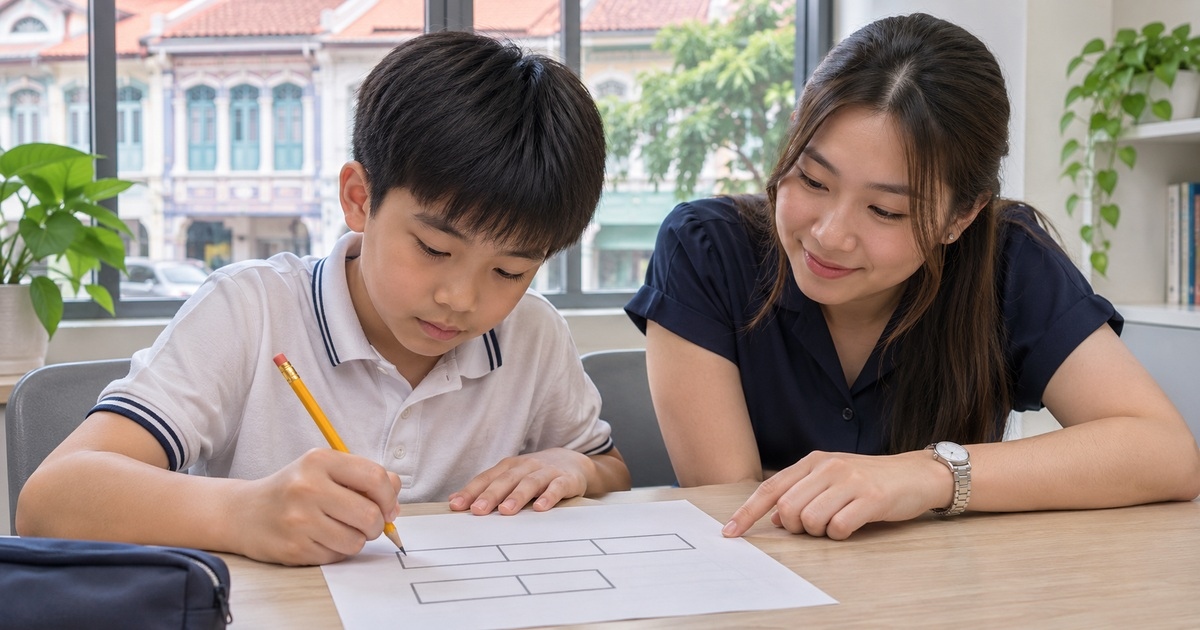
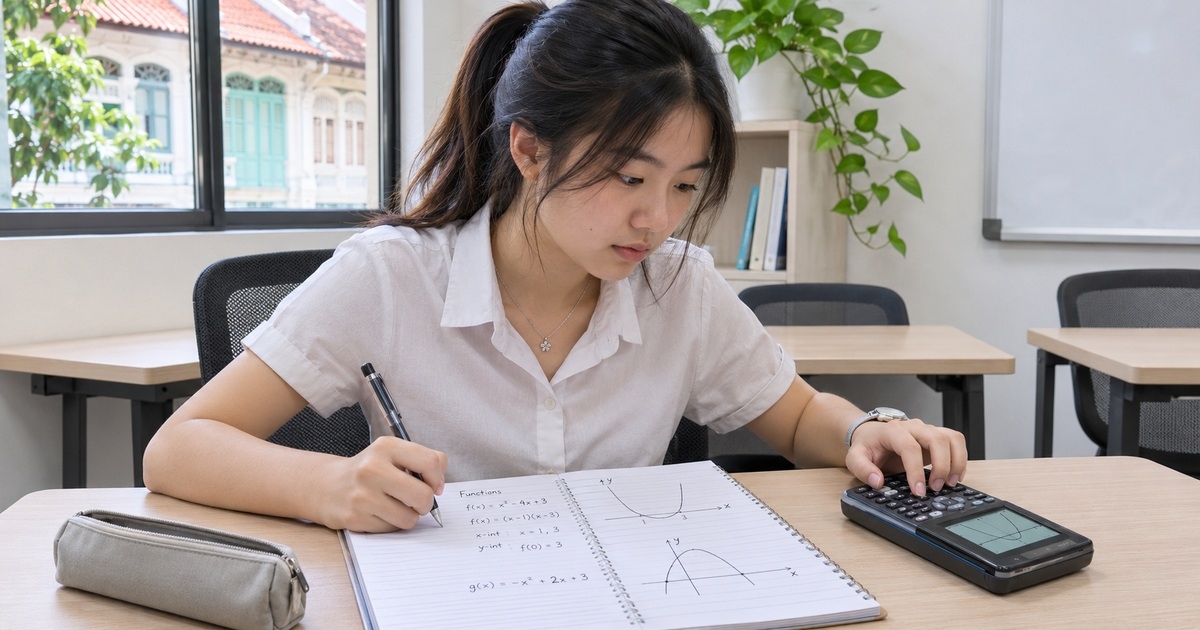
For most families, the year-end holidays before Primary 6 feel like the calm before the storm. The PSLE is still months away, but the P6 syllabus is heavier, school tests come quickly, and the habits a child brings into January tend to last all year. Parents looking for PSLE maths tuition Katong families can rely on often ask the same question: how much should my child do over the break? This guide offers a balanced answer, with a simple holiday routine and a focus on the problem-solving skills that PSLE Maths rewards.
What Changes in Primary 6
The Ministry of Education (MOE) Primary Mathematics syllabus notes that the 2021 syllabus applies to Primary 6 from 2026 onwards. It organises content into three strands: Number and Algebra, Measurement and Geometry, and Statistics. In P6, students meet several topics for the first time, including ratio, simple algebra, the area and circumference of circles, percentage increase and decrease, division by a proper fraction, and the average of a set of data.
None of these topics is especially difficult on its own. The challenge is that PSLE questions combine them, so a problem about a circle might also involve ratio, or an average question might hide a fraction step that is easy to miss.
Why Problem Solving Matters Most
The same MOE syllabus places mathematical problem solving at the centre of the curriculum and highlights general strategies, such as Pólya’s four steps and the use of heuristics, for tackling non-routine tasks. In practice, the PSLE rewards students who can read a long question, pick a sensible strategy and check that the answer makes sense in context.
Heuristics that P6 students should feel comfortable using include:
- drawing a model or diagram to show the relationships in a question;
- making a systematic list or table;
- looking for patterns in numbers or shapes;
- working backwards from the final information;
- comparing before-and-after situations;
- guess and check, used methodically rather than randomly.
A good way to practise is to solve the same question with two different heuristics and compare which felt clearer. Over time, children learn to recognise which strategy suits which type of question, and they waste less time staring at a blank page in the exam.
Children rarely need more heuristics. They need practice choosing the right one quickly, and the confidence to switch if the first idea does not work.
Understanding the PSLE Format
The Singapore Examinations and Assessment Board (SEAB) lists PSLE Mathematics among the subjects with a revised format from 2026, and links to the full syllabus document. That document states that calculators are not allowed in Paper 1 but are allowed in Paper 2. Mental arithmetic, fraction skills and neat working therefore still matter a great deal, even for confident students.
A Simple Six-Week Holiday Routine
Children do not need hours of practice every day over the break. A short, steady routine works better and protects the rest every child needs:
- Week 1: Review the P5 year-end paper together and note the question types that lost marks.
- Weeks 2 and 3: Revisit fractions, percentage and rate, which several P6 topics build on directly.
- Week 4: Practise a few word problems a day, focusing on one heuristic at a time.
- Week 5: Preview ratio and simple algebra so the first P6 lessons feel familiar.
- Week 6: Rest, then complete one light mixed-topic set before school begins.
Around 30 to 45 minutes on most weekdays is plenty for most children. Keep weekends for family time, play and the festive season.
Habits That Pay Off in P6
- Show working clearly, even for short questions.
- Write units and check the answer against what the question asked.
- Keep an error log that groups mistakes by type, such as misreading or calculation slips.
- Explain a solution aloud to a parent before writing it down.
Short, regular practice also builds stamina. A child who has worked steadily for a few weeks finds it much easier to stay focused through a full paper in Primary 6.
Parents do not need to teach new content to help. Asking a child to explain their thinking is one of the most useful things you can do at home.
Common P6 Problem Sum Traps
Most marks in long PSLE questions are lost in a few familiar ways. Knowing them in advance helps children check their own work.
Ratio questions where one quantity changes
When something is added to or removed from one part of a ratio, the units change. Children who keep using the original units get the wrong answer even with perfect arithmetic. A before-and-after model solves most of these questions.
Percentage of what?
Percentage increase and decrease always compare against the original amount. Students who divide by the new amount instead lose the marks, so it helps to circle the base value before calculating.
Circles and composite figures
Perimeter questions involving semicircles and quarter circles often trip students up because they forget the straight edges. Shading or tracing the boundary with a pencil before calculating prevents this.
Average questions with a twist
Many average questions are really about totals. Reminding children that average multiplied by the number of items gives the total turns a confusing question into a simple one.
Supporting Your Child Without Pressure
The PSLE year can feel intense for the whole family. Children do best when home feels calm and predictable, with a clear routine and plenty of encouragement. Praise effort and good reasoning, not just marks. When a test goes badly, look at the mistakes together and agree on one thing to improve, instead of revisiting every error at once.
When Tuition Helps
Tuition is most useful when a child has clear gaps in P5 foundations, struggles to start word problems, or loses confidence after tests. Families comparing primary school maths tuition Singapore options can look for small classes, a clear approach to heuristics and regular feedback to parents.
At Glenn Lee Learning Centre, PSLE maths tuition Singapore classes run in small groups at Katong Shopping Centre, with weekday and weekend slots. Our Primary 6 lessons focus on PSLE problem solving maths tuition, teaching students to choose and justify a heuristic rather than memorise question types. Families preparing for both subjects can also read our guide to PSLE science tuition Singapore, and directions are on our tuition centre Katong Singapore page.
Frequently Asked Questions
Should my child study during the year-end holidays?
A light routine of 30 to 45 minutes on most weekdays helps, but rest matters too. The aim is a confident start to P6, not exhaustion.
Which P6 topics are new?
Under the 2021 syllabus, P6 introduces topics such as ratio, simple algebra, circles and average.
Can calculators be used in the PSLE?
SEAB’s syllabus states that calculators are not allowed in Paper 1 but are allowed in Paper 2.
When should my child start PSLE maths tuition?
Many families start in P5 or at the start of P6, especially when word problems or fractions are a concern.
Are lessons available online?
Yes. Glenn Lee Learning Centre offers lessons in Katong and online via Zoom.
Give Your Child a Calm Start to P6
A few weeks of steady, light practice can make Primary 6 feel far less daunting. Book a trial class at Glenn Lee Learning Centre to see how your child approaches problem sums and plan the year ahead.
REFERENCES
Ministry of Education Singapore. (2023). Mathematics Syllabus, Primary One to Six (2021 syllabus). MOE, hosted by Chua Chu Kang Primary School. https://chuachukangpri.moe.edu.sg/files/2021_Primary_Mathematics_Syllabus_P1_to_P6.pdf
Singapore Examinations and Assessment Board. (2026). PSLE Formats Examined in 2026. SEAB. https://www.seab.gov.sg/psle/psle-formats-examined-in-2026/