Additional Mathematics Tuition in Singapore: The 6 A-Math Topics Students Find Hardest
Posted on October 16, 2026

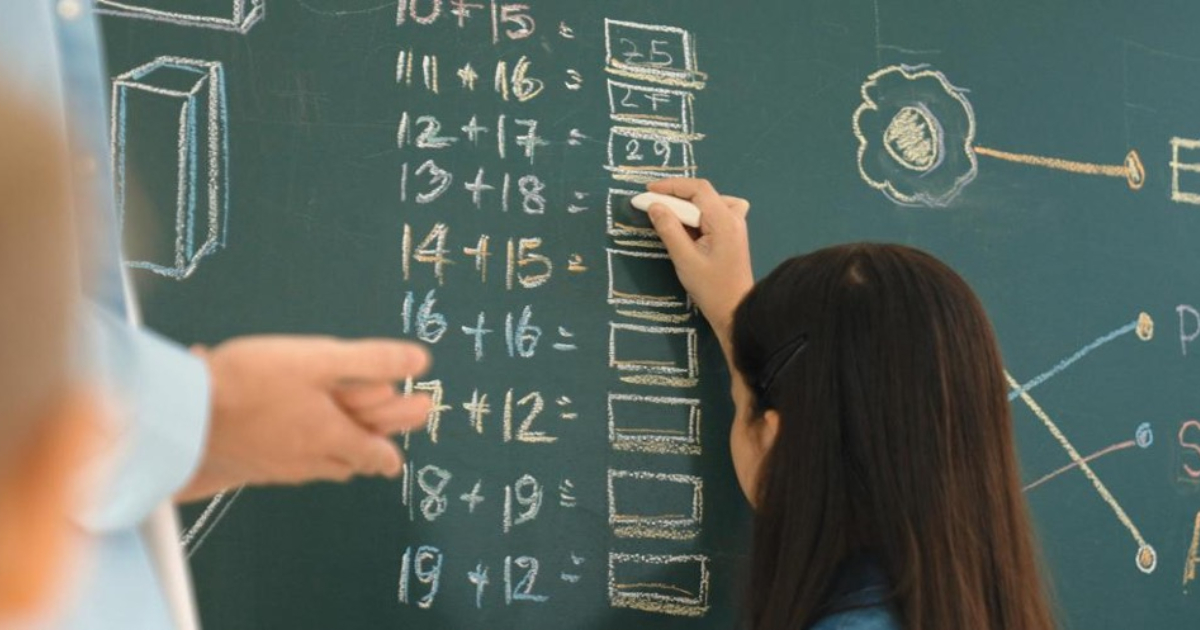
Additional Mathematics is often the subject that separates comfortable students from struggling ones in upper secondary school. Many parents start looking for additional mathematics tuition in Singapore after the first Sec 3 test results, when a child who coped well with E-Math suddenly finds A-Math unfamiliar and abstract. This article looks at the six A-Math topics students find hardest, why marks are lost in each one, and how to close the gaps before the national examination.
Why A-Math Feels So Different
According to SEAB’s G3 Additional Mathematics syllabus (K341), which replaces the O-Level 4049 syllabus from 2027, A-Math assumes knowledge of G3 Mathematics and prepares students for A-Level H2 Mathematics, where a strong foundation in algebraic manipulation and mathematical reasoning is required. In other words, E-Math teaches students to use maths as a tool, while A-Math expects them to work with it as a discipline.
That shift catches many students out. Questions are less about following a familiar method and more about choosing the right approach, manipulating expressions accurately and justifying each step. From 2027, A-Math will be taken under the new SEC at G3 level, and SEAB states that the mode of assessment and examination standards stay the same, with the familiar A1 to 9 grades. For a full explanation of the change, see From O-Level to SEC in 2027: What Sec 3 Physics and Chemistry Students Need to Know.
1. Quadratic Functions and Inequalities
This is often the first A-Math topic, and it sets the tone. Students need to use the discriminant to find conditions for real, equal or no roots, solve quadratic inequalities and connect algebra to the shape of a graph. Marks are usually lost through sign errors, flipping the inequality in the wrong direction, or forgetting to state the final range clearly. A quick sketch of the curve before solving prevents many of these mistakes.
2. Logarithms and Exponential Functions
Logarithms feel abstract because they cannot be pictured as easily as other topics. Students must apply the laws of logarithms, change the base when needed and solve exponential equations. The most common error is misapplying the laws, for example treating the logarithm of a sum as a sum of logarithms. Students also lose marks by ignoring restrictions on the values a logarithm can take, which leads to invalid solutions being accepted.
3. Trigonometric Identities and Equations
Trigonometry is where many students lose the most marks. Proving identities requires patience and a clear plan, while solving trigonometric equations requires finding every solution within a given range. Students often stop after finding one or two angles, forget to check the range, or mix up degrees and radians. Expressing a combination of sine and cosine as a single function is another area where careful, practised steps make a big difference.
4. Coordinate Geometry and Circles
Coordinate geometry combines algebra with geometric reasoning. Students need to find the equation of a circle, work with tangents and normals, and solve problems involving intersections. The ideas are not difficult on their own, but questions often involve several steps, and a small algebraic slip early on can carry through the whole answer. Labelled sketches and clear working help students spot errors before they spread.
5. Differentiation and Its Applications
Calculus is new to almost every Sec 3 student. Differentiation itself is manageable once the rules are learned, but applying it is harder. Students must handle rates of change, find stationary points, determine their nature and solve practical problems. Marks are commonly lost by forgetting the chain rule within a longer expression, or by finding stationary points without showing why each one is a maximum or a minimum. Word problems involving rates of change add another layer, because students must first translate the situation into an equation before any calculus can begin.
6. Integration
Integration is introduced as the reverse of differentiation, which is a helpful idea but not enough on its own. Students need to integrate a range of functions, evaluate definite integrals and find areas bounded by curves. Common errors include missing constants, mishandling negative areas below the x-axis and setting up the limits incorrectly. Because integration builds directly on differentiation, gaps in the earlier topic usually show up here too.
Why These Topics Matter Beyond Secondary School
Calculus, trigonometry and logarithms are not just A-Math topics. They form the base of JC H2 Mathematics, and students who leave secondary school with gaps in them often find the first year of JC much harder. Our guide on building an A-Math foundation for JC H2 Maths explains how these skills carry forward.
How Small-Group Tuition Helps
A-Math mistakes are often hidden in the working rather than the final answer. That is why maths tuition in small groups works well for this subject. With only a few students in the room, a tutor can read each student’s working line by line, spot the exact step where things go wrong and correct it straight away.
At Glenn Lee Learning Centre, additional mathematics tuition follows a clear cycle: diagnose the weak topics, rebuild the method, then practise with exam-style questions until the method is reliable. Lessons are delivered through the centre’s maths tuition in small groups approach, so every student gets regular, personal feedback.
Students preparing for the national exam can continue into Sec 4 A-Math tuition, which focuses on timed practice, mixed-topic papers and exam technique. Lessons are available at the centre in Katong Shopping Centre and online via Zoom, with weekday and weekend slots to fit around school commitments.
When a Crash Course Makes Sense
Regular weekly tuition is the most reliable way to build A-Math skills, because the subject depends on steady practice over time. However, some students also benefit from a short, focused programme closer to the exam, especially if a few topics remain weak after the mid-year or preliminary examinations. An intensive A-Math crash course works best as a final push for a student who already has the basics, rather than as a replacement for learning the topics properly.
Study Habits That Make a Difference
- Practise mixed-topic question sets, since exam questions often combine several topics.
- Keep an error log and review it before every test.
- Show full working, even for steps that feel obvious. The syllabus itself warns that omitting essential working will result in loss of marks.
- Learn key identities and formulas, but also understand where they come from.
- Time yourself on full papers in the final months, so pacing becomes second nature.
Frequently Asked Questions
Is A-Math needed for JC H2 Maths?
The A-Math syllabus is designed to prepare students for H2 Mathematics, and many junior colleges expect it. Check each school’s requirements.
When should my child start A-Math tuition?
Early in Sec 3 is ideal, before gaps in foundational topics affect later ones such as calculus.
Which A-Math topic is the hardest?
It varies by student, but trigonometry and calculus are the topics where marks are most often lost.
Is small-group tuition better than one-to-one for A-Math?
Small groups suit most students and offer close feedback. One-to-one lessons suit students who need intensive support on specific topics.
Will A-Math change under the SEC?
SEAB states that the mode of assessment and examination standards stay the same under the SEC.
Master A-Math Before the National Exam
A-Math rewards accuracy, practice and clear reasoning, and all three improve fastest with regular feedback. Book a trial class at Glenn Lee Learning Centre to find out which topics need attention and build a plan for the months ahead.
REFERENCES
Singapore Examinations and Assessment Board. (2025). G3 Additional Mathematics Syllabus K341, Singapore-Cambridge Secondary Education Certificate (2027). SEAB. https://isomer-user-content.by.gov.sg/334/7609d80d-5786-44e8-b79f-f70e29925cd5/K341_y27_sy.pdf
Singapore Examinations and Assessment Board. (2026). Secondary Education Certificate (SEC). SEAB. https://www.seab.gov.sg/secondary-education-certificate-sec/